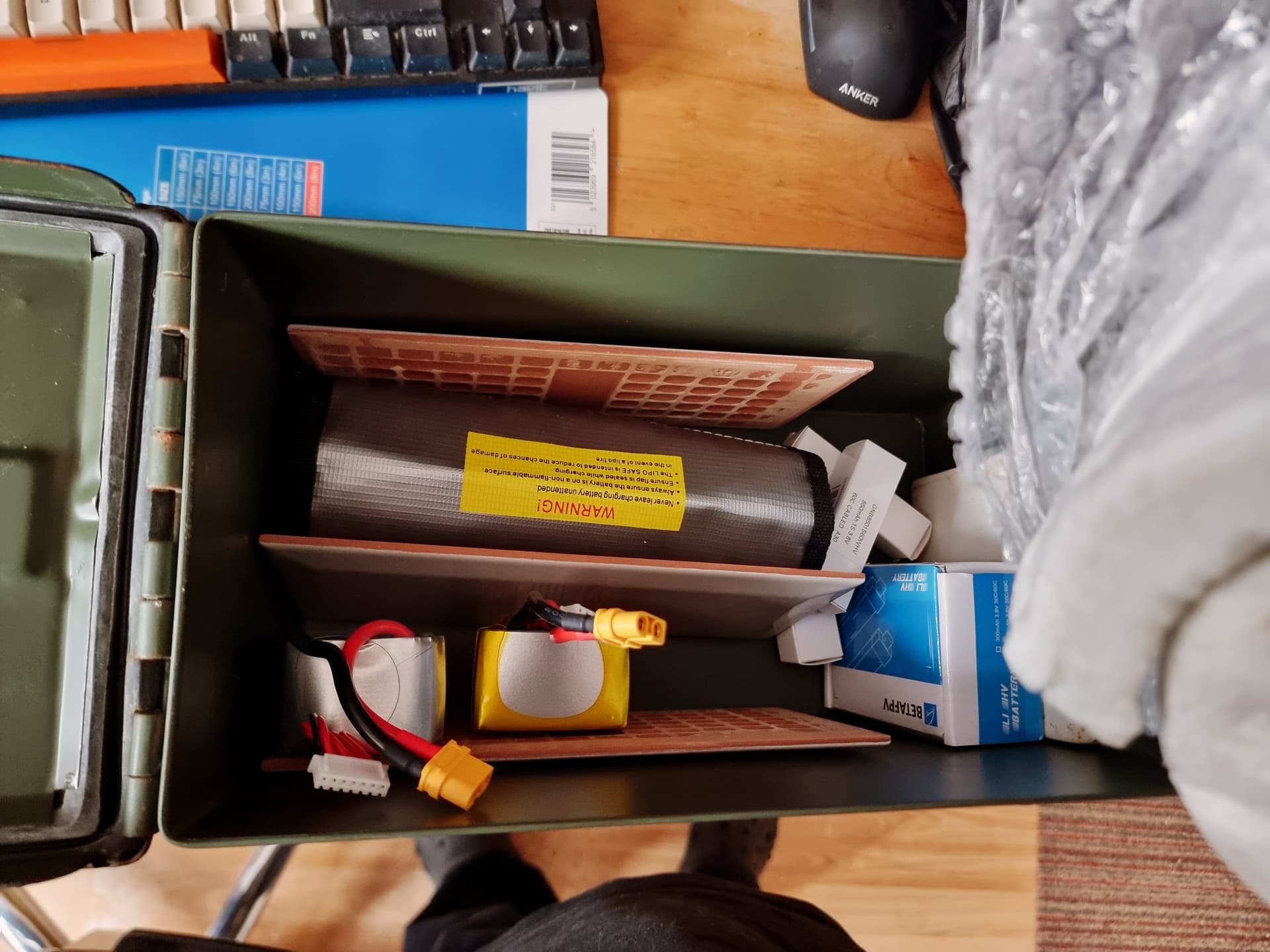
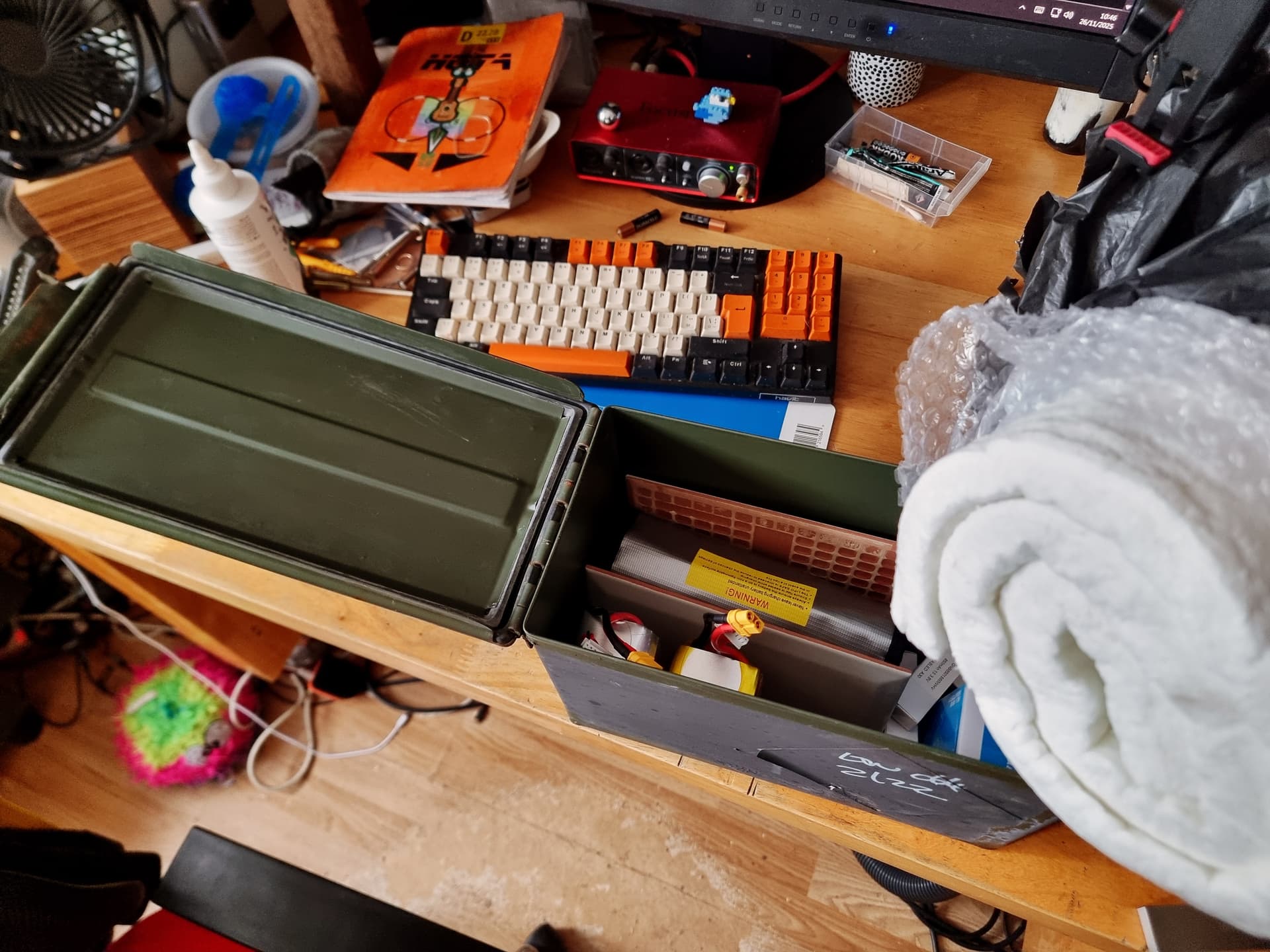
After a spate of battery fires in my area I decided that I need a lipo fire box.
I’m saving up for a shed so decided to try and do this with no budget.
Lipo thermal runaway fires rage at 600C or more and go on for a long time, especially if the fire spreads to other batteries. That is enough energy to start a serious fire, so I did some research into materials.
I settled on a design that features an external steel layer (the thicker the better), a middle layer of high temperature insulator and a heat resistant ceramic inner layer.
I found the steel pretty quickly - there was a 4ft batten housing in a skip made of thick steel, probably 1.5mm, and there are also a lot of fridges in people’s front gardens.
I found the ceramic after a bit more hunting. People discard old tiles quite regularly.
The insulator was harder. I thought I might find some vermiculite or fire brick scraps but, given the price, I think builders tend to re-use it. And in London virtually nobody has fireplaces.
I opted for some ceramic wool, which was about 11 quid for a 1000x600mm piece, 25mm thick. Outrageous. But it might be enough for two boxes.
I then got embroiled in various DIY projects around the house, so instead of making my own steel housing I bought a steel ammo box rom an army surplus website (10.95 including postage from militaryKit.com). The steel is not as thick as I would like (0.8mm) and the lid is overkill, but it is well built.
The box will need some vents cut into it so that hot expanding gases from a thermal runaway fire don’t blow it open.
I don’t have quite enough tiles yet to make separate tile/wool compartments for my 6s lipos. I also want to surround the ceramic wool with tiles, gluing them together with fire cement, so that it’s all enclosed. It’s not said to be carcinogenic but I get itchy just from looking at it.
The wool and fire cement are described as being capable of withstanding 1200C, tiles can (probably?) withstand a similar temperature as long as they are facing with the unglazed side towards the batteries.
If I find some vermiculite sheeting I’ll build the next box using that, as it is thinner.
The whole thing is isloated with a scrounged baking tray from my wooden shelf. In case of fire I have a long rod on standby so I can pick up the box by the handle and take it outside to roast away on the pavement .
Total cost: 22 quid.
Please note: I’m not a professional and my knowledge of fire containment is based on basic safety knowledge and manufacturer-declared materials parameters.
This setup is based on housing 2 6S lipos and 20 1S lipos.
Feedback is welcome.